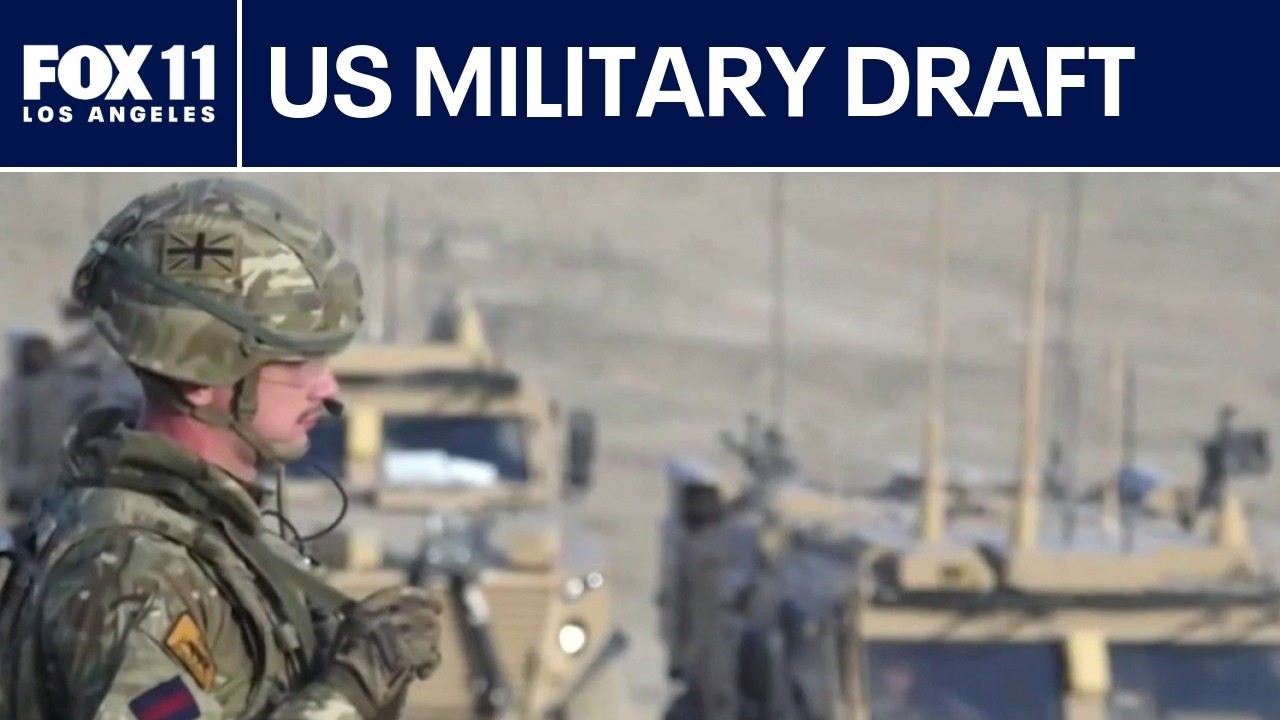
Automatic Draft Registration Approved: Is a Military Draft Coming?
Recent legislative developments have sparked widespread discussion and concern across the United States. On June 14, 2024, the U.S. House of Representatives passed a significant amendment as part of the National Defense Authorization Act (NDAA) for Fiscal Year 2025. This amendment, if enacted, would fundamentally alter how young men are registered with the Selective Service System, moving from an opt-in system to an automatic one for those between the ages of 18 and 26. While this change aims to streamline the registration process, it has naturally led many to ask a critical question: Is a military draft coming?
Understanding this development requires a clear distinction between automatic registration and the actual reinstatement of a military draft. This article will delve into the specifics of the House's vote, clarify the implications of automatic registration, explore the legislative path ahead, and ultimately address the likelihood of conscription in the near future. We'll also provide context on what this means for young Americans regarding their obligations and the military draft registration date.
The House Vote That Changed Selective Service Registration
The amendment, approved with a vote of 217 to 199, marks a pivotal shift from the existing system, which has been in place since 1980. Currently, young men are required to proactively register with the Selective Service System within 30 days of their 18th birthday. The proposed change would remove this individual responsibility, instead mandating automatic registration using federal databases for every male U.S. citizen and other male persons residing in the United States between the ages of eighteen and twenty-six.
Specifically, the amended bill states: "Except as otherwise provided in this title, every male citizen of the United States, and every other male person residing in the United States, between the ages of eighteen and twenty-six, shall be automatically registered under this Act by the Director of the Selective Service System." An important exemption is included for non-immigrant aliens lawfully admitted to the U.S., provided they maintain their lawful nonimmigrant status.
The vote itself revealed a partisan divide, with 211 Republicans supporting the measure and 196 Democrats voting against it, though a few from each party crossed the aisle. This initial approval in the House represents a significant legislative step, moving the long-standing debate over Selective Service registration into a new phase. For many, the very notion of an automatic military draft registration date being handled by the government, rather than the individual, raises questions about personal liberty and government overreach, even if it simplifies an existing requirement.
Automatic Registration vs. Military Draft: Understanding the Crucial Distinction
It is imperative to distinguish between automatic registration for Selective Service and the actual reinstatement of a military draft (conscription). While the recent House vote addresses the former, it does not, in any way, authorize the latter. This distinction is often misunderstood, leading to unnecessary anxiety.
- Automatic Registration: This refers to the process by which individuals are added to the Selective Service System's database. It is essentially an administrative update designed to ensure the system has an accurate and comprehensive list of eligible individuals, should a draft ever be needed. It eliminates the need for individuals to remember and complete the paperwork themselves, potentially improving compliance. The target military draft registration date would become obsolete as it would be handled automatically by the government once an eligible male turns 18.
- Military Draft (Conscription): This is the involuntary induction of individuals into military service. Reinstating a military draft in the United States requires a series of extraordinary steps that are far beyond merely updating registration procedures. It would necessitate explicit legislative approval from Congress, a presidential proclamation declaring a national emergency, and significant public and political consensus. Such conditions typically arise only during major national security crises or declared wars.
Currently, the U.S. operates under an all-volunteer force, a model that has been in place since 1973. Despite ongoing recruitment challenges, there are no active congressional bills, hearings, or official proposals to reinstate a draft. Market predictions reflect this reality, with traders pricing "No" at 89.5% for a military draft being authorized in 2026. The high bar for conscription, coupled with historical public opposition and bipartisan hurdles, suggests the odds of an imminent draft remain very low. The procedural update to automatic registration is merely about maintaining a standby pool more efficiently, not about activating it.
The Legislative Journey: What Happens Next?
The House's approval of automatic Selective Service registration is not the final word. The amendment was passed as part of the National Defense Authorization Act (NDAA) for Fiscal Year 2025, an annual "must-pass" bill. However, the legislation now advances to the Senate for further deliberation. The legislative process for the NDAA typically involves:
- Senate Consideration: The Senate will consider its own version of the NDAA. It's possible the Senate's version might contain different proposals regarding Selective Service. For instance, there have been discussions in the Senate about potentially expanding registration to include women, a proposal distinct from the House's focus on automatic registration for men.
- Conference Committee: After both the House and Senate pass their respective versions of the NDAA, a conference committee is formed. This committee, composed of members from both chambers, will reconcile the differences between the two versions in closed-door negotiations. It's in this stage that the final language for any Selective Service changes will be ironed out.
- "Bargaining Chips": Political analysts suggest that proposals like automatic registration or expanding it to women might serve as "bargaining chips" during conference negotiations. They could be withdrawn in exchange for concessions on other issues within the massive NDAA bill. Therefore, the final package might include either, neither, both, or a compromise on Selective Service.
The ultimate outcome regarding automatic registration, and any potential expansion of Selective Service, will likely not be known until late this year, potentially after the elections, when the conference committee completes its work. This intricate process means that while the House has made a move, the final shape of Selective Service registration reform is still uncertain. You can learn more about the next steps here.
Practical Implications and What This Means for Young Americans
For young men aged 18 to 26, the potential shift to automatic registration carries several practical implications:
- Reduced Burden: The most significant change is the removal of the personal responsibility to remember and complete Selective Service registration forms. If enacted, the system would handle this automatically using existing federal data. This could reduce instances of non-compliance, which can lead to various penalties, including denial of federal student aid, federal job eligibility, and even imprisonment.
- No Immediate Change in Service Obligation: It is crucial to reiterate: automatic registration does not create an immediate obligation for military service. It simply streamlines the maintenance of a database that *could* be used if a draft were to be reinstated in the future. The conditions for an actual draft remain unchanged and are extremely stringent.
- Ongoing Awareness: While the individual burden of registering might decrease, it's still vital for young Americans to remain informed about legislative developments related to national service. Understanding the difference between registration, which would now be automatic, and conscription, which is still highly improbable, is key to informed citizenship.
- No Change to All-Volunteer Force: The U.S. military remains committed to its all-volunteer force model. Recruitment efforts continue to evolve, but the fundamental reliance on volunteers is expected to persist for the foreseeable future, making the activation of a draft an extreme last resort.
The primary benefit of this change, from the government's perspective, is to ensure that the Selective Service System's database is as complete and accurate as possible. For individuals, it simplifies a civic duty that has historically been a point of confusion or oversight for some. The military draft registration date for future generations would essentially be their 18th birthday, with the process handled seamlessly in the background.
Conclusion
The U.S. House of Representatives' approval of automatic draft registration for men aged 18-26 marks a significant procedural update to the Selective Service System. This amendment, part of the annual NDAA, aims to modernize and streamline the registration process by replacing the current manual system with an automatic one, utilizing federal databases. However, it is paramount to understand that automatic registration is distinctly separate from the reinstatement of a military draft. While the legislative journey for this proposal is still ongoing, requiring Senate approval and reconciliation in a conference committee, the high bar for actual conscription—demanding explicit congressional authorization, a presidential proclamation, and a national emergency—remains unchanged. With the United States firmly committed to its all-volunteer force, the likelihood of a military draft in the near future remains extremely low. This development is primarily about administrative efficiency, not about activating a draft, ensuring that the military draft registration date is no longer a personal burden for young men.